
Foreword
The policy imperative
The thirty-second version
Hong Kong's Secretary for Transport and Logistics sets the policy ambition. The industry's centre of gravity is moving decisively to Asia, and the future will be decided upstream, where customer demand, long-term capital and practical operating capability align.
The global centre of gravity for the maritime industry is shifting decisively to Asia, propelled by expanding regional supply chains and long-term economic momentum. Yet, realising this immense potential requires far more than expanding vessel capacity. The future will be decided upstream, where customer demand, long-term capital, and practical operating capability align.
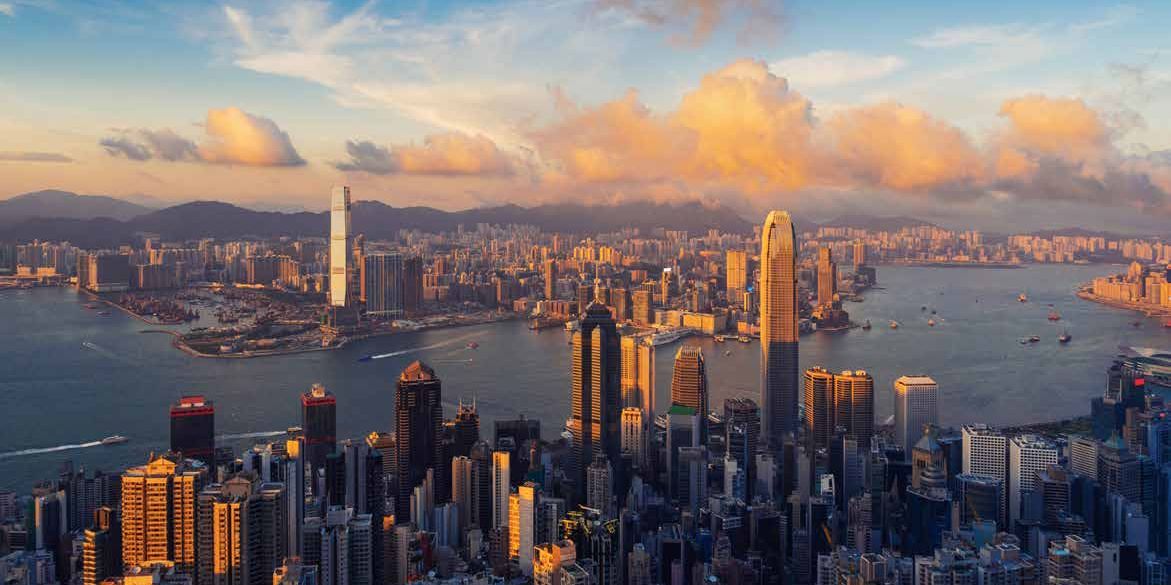
Positioned at the heart of Asia as the pivotal gateway bridging the world and the Chinese Mainland, Hong Kong serves as the ideal intersection to anchor these critical connections. To translate our policy vision into commercial reality, deepening partnerships with home-grown champions like The Caravel Group alongside the wider shipping and trading communities are instrumental.
This whitepaper offers meaningful insights into the strategic positioning required to attract more maritime-related business.
Ms Mable Chan, JP, Secretary for Transport and Logistics, Hong Kong SAR Government
In this paper
Read it offline
The full paper, ready to download
Every chapter is here on the site to read. Download the paper to read offline.
At Hong Kong Maritime Week 2026
15 to 21 November 2026. Join us for the discussions and help to build a future-ready maritime industry.
https://www.caravel-group.com/insights/capital-meets-cargo
Where this leads

Caravel Maritime
Third-party ship management, commercial and chartering services, and asset ownership and investments.
Learn more >

International Maritime Institute
Training pathways that bring job-ready cadets into careers at sea.
Learn more >
Our impact
How the Group approaches sustainability and its wider responsibilities.
Learn more >
Sources: 0 references
- Enterprise Singapore, Trade Ecosystem. Official overview of Singapore’s global-trading ecosystem, including its community of approximately 350 global traders and its commodity-derivatives, financing and risk-management capabilities. Accessed 10 October 2026.
- Shanghai Municipal People’s Government, World’s No 1 container port. Used for Shanghai’s container throughput of more than 55 million TEU in 2025 and its position as the world’s busiest container port.
- Maritime UK, Maritime Business Services. Used for the UK’s share of global marine insurance premiums (35%) and shipbroking (26%), and London’s role in maritime law and arbitration. Accessed 3 November 2026.
- Baltic Exchange and Xinhua News Agency, Xinhua-Baltic International Shipping Centre Development Index Report 2026. Used for Singapore’s position as the leading international shipping centre and Shanghai’s rise to second place, with London third, Hong Kong fourth and Dubai fifth. Published July 2026.
- Trade and Industry Department, HKSAR Government, Hong Kong and Mainland: Trade Statistics. Official statistics on trade between Hong Kong and the Chinese Mainland in 2025.
- UN Trade and Development, Review of Maritime Transport 2025. Staying the course in turbulent waters, published 24 September 2025. Used for the context of trade uncertainty and changing shipping routes, including the 5.9% rise in ton-miles in 2024.
- UN Trade and Development, Strait of Hormuz Disruptions: Implications for Global Trade and Development. Effects of disruption in the Strait of Hormuz on oil and gas flows, freight rates, bunker-fuel prices, insurance premiums, fertilizer costs and food prices. Published 10 March 2026.
- Federal Department of Foreign Affairs, Switzerland, Commodities Trading. Used for the figures of more than 900 commodity trading companies and over a third of global crude oil trade handled by Switzerland-based traders. Accessed 3 November 2026.
- HKSAR Government, Statistics on Vessels, Port Cargo and Containers for the Fourth Quarter of 2025. Released 5 March 2026. Used for the full-year 2025 changes in inward and outward shipments.
- Environmental Defense Fund and Lloyd’s Register Maritime Decarbonisation Hub, Financing Shipping’s Energy Transition. Identifies a financing gap exceeding US$1 trillion, drawing on more than 40 interviews across the maritime value chain. Published September 2025.
- HKSAR Government, Tax Concessions for Shipping-Related Activities and Physical Commodity Trading. Includes a proposed half-rate (8.25%) profits-tax concession for qualifying physical commodity trading. The Bill was gazetted on 12 June 2026.
- Hong Kong Monetary Authority, Sustainability Report 2025. Green and sustainable debt issued in Hong Kong exceeded US$76 billion in 2025; international green and sustainable bonds arranged in the city totaled US$37.7 billion, 40% of Asia’s total.
- HKSAR Government, Green Maritime-Fuel Bunkering Activity. 38 bunkering operations involving more than 60,000 metric tons in the first five months of 2026, and 126 operations involving more than 220,000 metric tons in 2025.
- HKSAR Government, 2026 Policy Address: Green Maritime-Fuel Storage at Tsing Yi South. Planning application and statutory procedures to begin in 2027, with tenders invited in early 2028.
- Digital Policy Office, HKSAR Government, Port Community System. Integration of sea, land and air logistics information, round-the-clock cargo tracking and designed capacity of approximately 50,000 users.
- Hong Kong Maritime and Port Development Board, Quarterly Bulletin. Used for the number of businesses registered on Hong Kong’s Port Community System (more than 9,000). Published November 2026.
- HKSAR Government, Port Community System Rollout. Launch of the Port Community System and its role in supporting trade-finance assessment.
- BIMCO and International Chamber of Shipping, Seafarer Workforce Report 2026. Seafarers serving the global merchant fleet, the shortage of STCW-certified officers and projected officer demand through 2030.
- International Maritime Institute, Institutional Background and Training Development. IMI’s training pathways, simulator-based instruction, curriculum development and links between maritime education and employment.
- Bank of Communications Financial Leasing, BoCom Shipping. The company owns 432 ships and has a shipping portfolio exceeding RMB100 billion, the largest merchant fleet among China’s domestic financial-leasing companies.
Get in touch
To discuss a business opportunity or to learn more
Contact us